How Telecom Operators Run Handset Financing Without Rising Defaults
Handset financing is one of the most effective ways for a telecom operator to win and keep subscribers. A customer who gets a better phone on easy monthly payments is more likely to stay, use more data and spend more. The challenge is the other side: once phones go out on credit, some customers will stop paying, and a telco's systems are rarely built to chase small loans.
Key takeaways
- Handset financing drives acquisition, loyalty and data usage.
- The risk is defaults spread across many small accounts.
- Linking each handset to its plan and automating reminders keeps risk manageable.
- Device restriction must follow clear rules and keep essential services working.
Why telcos finance handsets
For many customers, the upfront price of a good smartphone is the biggest barrier to upgrading. Spreading that cost into monthly payments removes the barrier. For the operator, a financed handset often comes with a longer relationship: the customer is tied into a plan, uses more services, and is less likely to switch.
Where the risk comes from
Unlike a bank, a telco's billing systems are designed for service charges, not loan recovery. When a customer stops paying for the handset, the operator may suspend the plan, but the phone itself keeps working on any other network or Wi-Fi. Multiply that by thousands of small accounts and the losses add up quickly.
Building a program that scales
- Enroll every handset at sale. Link each device to its plan or loan, so you always know which phone belongs to which account.
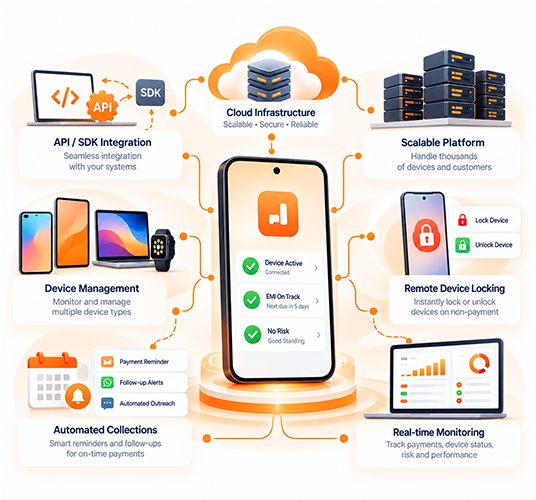
- Connect billing and device status. When a payment is missed or made, the device status should update automatically, not through a weekly spreadsheet.
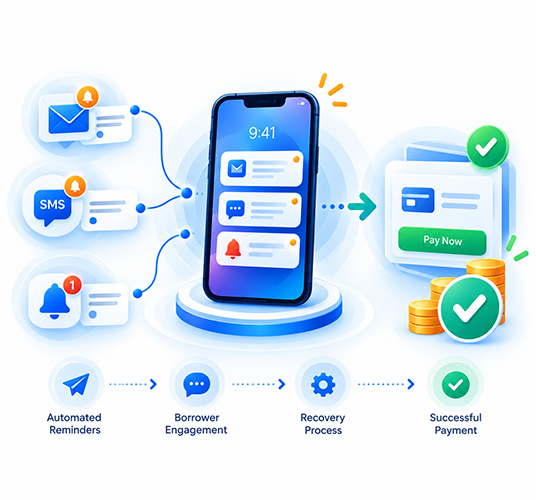
- Remind before you restrict. Use SMS, app and on-screen reminders well before any restriction.
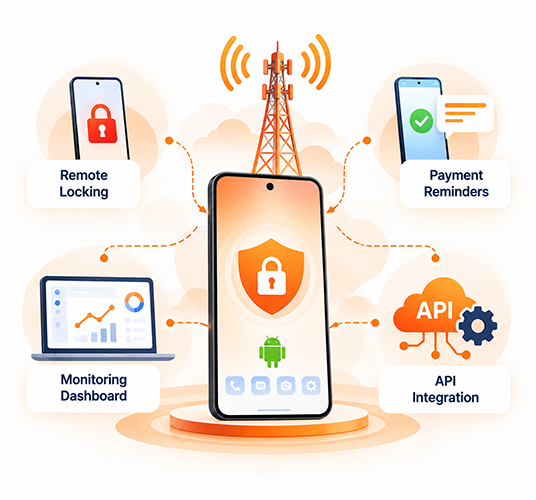
- Use OEM-level locking for scale. For high-volume programs, native locking built into the phone by the manufacturer is harder to bypass than an app.
- Plan for many markets. If you operate in several countries, your rules and reporting need to handle different regulations and currencies.
Fairness matters as much as recovery
Customers judge an operator by how it treats them when things go wrong. Restrictions should be gradual, clearly explained and never cut off emergency calls. In India, RBI's directions from 1 January 2027 make this explicit for regulated lenders: restriction only on the financed device, not before 30 days overdue, a full lock only after 60 days, calls, SMS and SOS always on, and unlock within an hour of payment. Many telco financing programs run through a partner bank or NBFC, which is responsible for following these rules.
How Loksiz supports telecom operators
Loksiz links handsets to their plans at scale, connects to billing and payment systems through APIs, automates reminders and applies restrictions only by the rules you set. As the global partner for native OEM locking on itel, Infinix and TECNO, it also offers manufacturer-level control for high-volume programs. Read more on our telecom operators page.
See Loksiz on your own devices
Book a short, free demo and see how Loksiz links devices to loans, reminds borrowers and unlocks on payment.
This article is general information, not legal or financial advice. For RBI rules, always check the latest directions and your loan agreements.